
AI Agents 2026
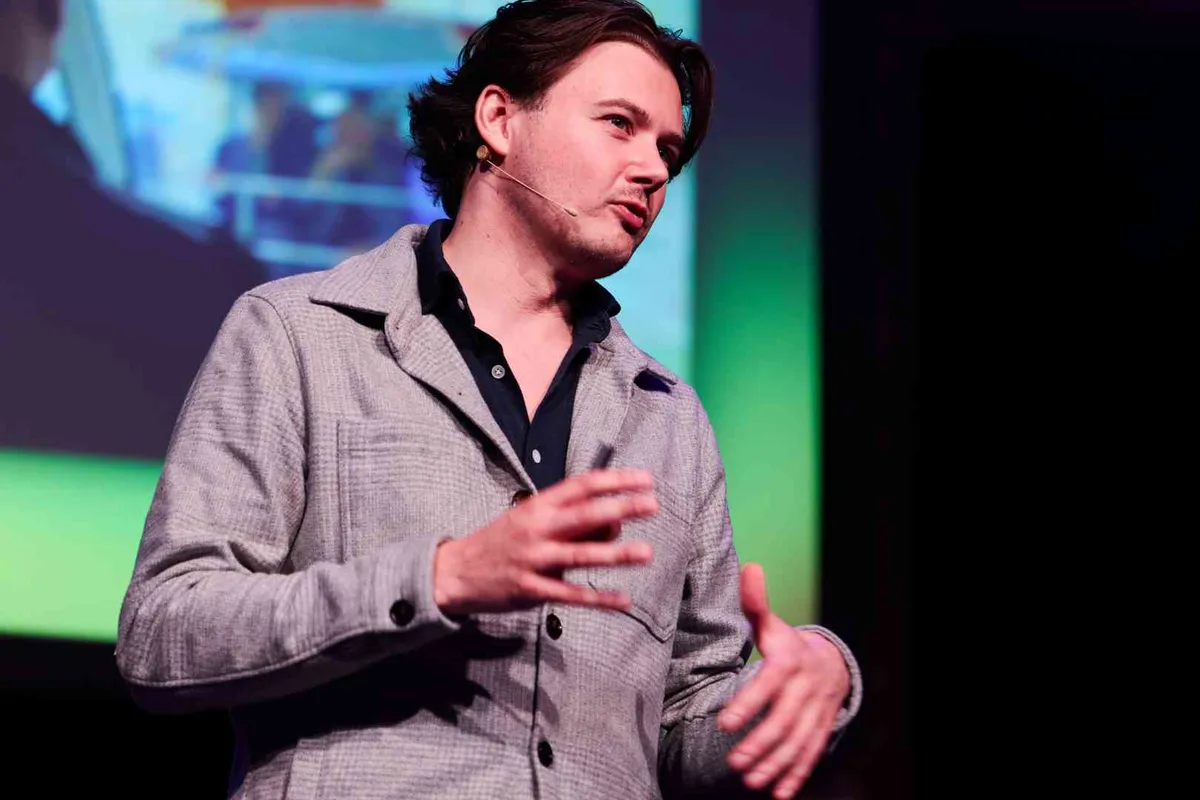
We are at the beginning of the largest transformation in office work since email: AI agents that do not just provide answers, but autonomously execute tasks, make decisions, and collaborate with other agents. In this keynote, Remy Gieling shows how forward-thinking organizations are already deploying AI agents at scale. McKinsey has over 25,000 agents running, Prosus operates with 40,000 agents, and companies like IKEA, Vercel, and NN Group demonstrate that this is not a future scenario — it is happening now.
Remy dives into the practice: what do these agents actually do? From HR agents screening applications and finance agents generating reports, to marketing agents optimizing campaigns and customer service agents handling complex inquiries autonomously. You will learn the difference between single agents, multi-agent systems, and full agentic workflows — and why orchestrating agents is becoming the new core competency for every organization.
But technology alone is not enough. Remy shares a proven framework for successfully implementing AI agents while avoiding the pitfalls others fall into: from governance and compliance to change management and the human role in a world of autonomous systems. Based on his bestselling book "AI Agents" (2025) and dozens of implementation projects at The Automation Group, he shows the steps required to move from experiment to enterprise scale.
This keynote is essential for C-level executives, IT directors, operations managers, and innovation leaders looking to transform their organization into an Agentic Enterprise. You will leave with a clear picture of the possibilities, a realistic implementation plan, and the urgency to start now — because the frontrunners' lead is growing every month.
Remy takes into account the allocated speaking time and ensures a presentation that exactly meets the expectations and needs of the audience. His sessions are interactive, full of humor and full of current trends, insights and practical examples from leaders at home and abroad.
In addition, he shares handy and useful AI tools that allow participants to get started right away, so that the information is not only inspiring, but also tangible and applicable.
With thousands of hours of experience in front of TV cameras, on the radio, in podcasts and on stages, Remy knows how to captivate every audience with a catchy and relevant story.
His background as a journalist and AI expert enables him to convey complex issues easily and in an engaging way, so that not only the participants themselves, but also their teams and organizations, get concrete value from his sessions. The many laudatory references confirm the impact and value of his lectures, in which inspiration and practical insights come together perfectly.

Interested in a keynote, workshop or training?
Get in touch immediately
_result.webp)


These companies are already working with Remy Gieling as a technology expert or keynote speaker for impactful webinars and events







Interested in a lecture?
Are you interested in a lecture or questions about the possibilities? Fill out the form and we'll get back to you as soon as possible.
During working days, you can also call