
AI Trends 2026
The AI revolution is accelerating in 2026 at a pace most organizations do not see coming. In this keynote, Remy Gieling takes you through the breakthroughs that matter right now: from humanoid robots entering factories and warehouses, to personal AI agents autonomously executing tasks on your behalf through platforms like OpenClaw. You will learn why the shift from generative AI to agentic AI represents the largest transformation since the arrival of the internet — and what this concretely means for your organization.
Remy shares insights drawn from conversations with technology leaders at OpenAI, Nvidia, Anthropic, and Tencent in Silicon Valley and China. He reveals the strategies behind the AI race between the US, China, and Europe and translates them to the European business context. From the explosive growth of open-source models and the rise of reasoning AI, to the impact of the EU AI Act and its first obligations that took effect in 2025: you will gain a clear picture of what is happening now and what to expect over the next 1,000 days.
This is not a dry trend list. Remy combines the latest developments with compelling examples: companies like Meituan delivering 60 million meals daily using drones, over 250 Chinese car manufacturers investing in autonomous mobility, and the rapid rise of AI agents in office environments worldwide. You will hear what frontrunners do differently, which technologies are truly breaking through, and which hypes you can safely ignore.
After this keynote, you will know exactly which AI trends are relevant to your sector and how to act on them — starting today. Featuring concrete predictions, practical takeaways, and the sense of urgency needed to stay ahead. Rated 8.4+ on average by thousands of participants at organizations including ASML, Rabobank, KLM, and De Nederlandsche Bank.
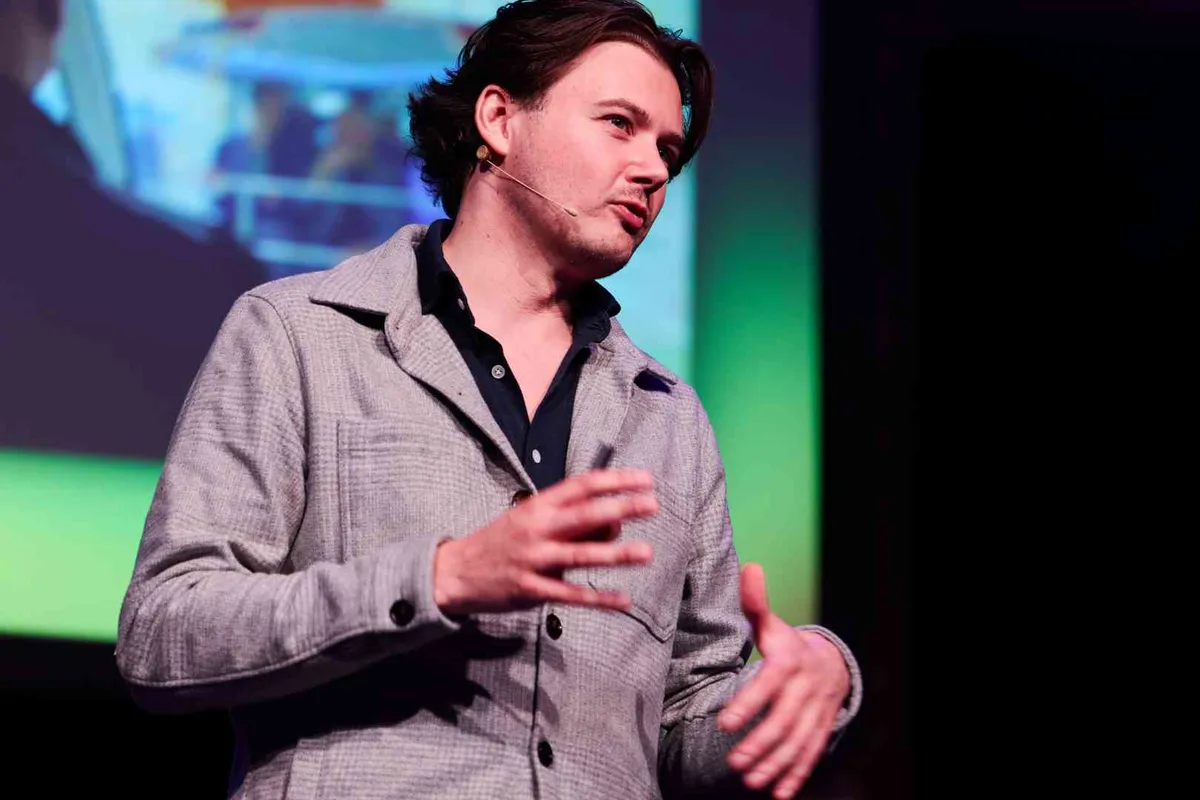
Remy takes into account the allocated speaking time and ensures a presentation that exactly meets the expectations and needs of the audience. His sessions are interactive, full of humor and full of current trends, insights and practical examples from leaders at home and abroad.
In addition, he shares handy and useful AI tools that allow participants to get started right away, so that the information is not only inspiring, but also tangible and applicable.
With thousands of hours of experience in front of TV cameras, on the radio, in podcasts and on stages, Remy knows how to captivate every audience with a catchy and relevant story.
His background as a journalist and AI expert enables him to convey complex issues easily and in an engaging way, so that not only the participants themselves, but also their teams and organizations, get concrete value from his sessions. The many laudatory references confirm the impact and value of his lectures, in which inspiration and practical insights come together perfectly.

Interested in a keynote, workshop or training?
Get in touch immediately
_result.webp)


These companies are already working with Remy Gieling as a technology expert or keynote speaker for impactful webinars and events







Interested in a lecture?
Are you interested in a lecture or questions about the possibilities? Fill out the form and we'll get back to you as soon as possible.
During working days, you can also call